
Key takeaway
A net quantity statement describes how much product is in one retail package. Review it alongside—but never confuse it with—the serving size, servings per container, and batch yield.
What a net quantity statement describes
A net quantity statement tells a shopper how much product is in one retail package. On food packaging, you may also hear it called the net weight or net contents statement. The exact wording and units depend on the product and market, but the underlying question is simple: how much finished product is inside this package?
It is not a recommended serving, a nutrition calculation basis, or the total amount your whole batch produced. That distinction matters because each number answers a different packaging question.
- One finished retail package
- The actual amount of product in that package
- Not a serving plan or a total batch yield
Keep net quantity, serving size, servings per container, and batch yield separate
These terms often appear in the same project, so they are easy to blend together. A clear review keeps each one tied to its own job. For example, a package of muffins might contain 384 g of product, use 1 muffin (64 g) as its serving size, and contain 6 servings per container. A production batch may make many of those packages.
In that example, 384 g is the package net quantity. The 64 g serving size is the basis for per-serving nutrition information. Six servings per container tells the shopper how many of those servings are in one package. Neither number replaces the other.
- Net quantity: the total finished product in one package
- Serving size: the amount used for per-serving label information
- Servings per container: how many declared servings are in that package
- Batch yield: how much the production run makes before it is divided into packages
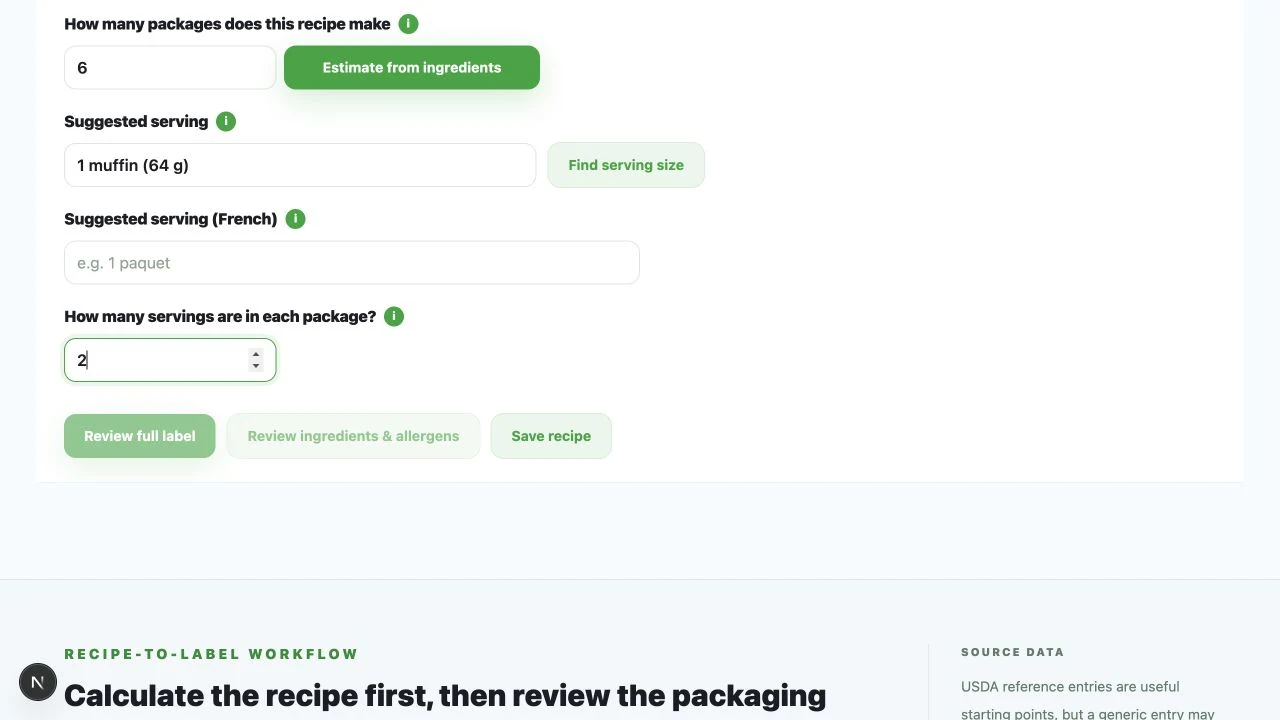
Package and serving review
Use the package details area to keep the expected package count, serving label, and servings per package visible together. These inputs help a team review the relationship between production, retail packages, and per-serving label information.
Focused crop: package count
Package count tells the team how the production batch is divided into retail units. It is not a substitute for a declared serving count.
Focused crop: serving details
Serving label and servings per package support the Nutrition Facts review. Keep them aligned with the current package plan without conflating them with net quantity.
Start with the finished package—not the original recipe weight
A recipe’s ingredient total can be a useful planning input, but it is not automatically the final net weight per package. Baking loss, evaporation, draining, trim, fill targets, and the number of packages made can all change the amount that reaches the shelf.
Use the actual finished product and intended package configuration as the source for your packaging review. If the fill weight, package size, or number of items per package changes, revisit the net quantity statement as well as the serving details and label artwork.
- Confirm the product after the relevant production steps are complete
- Confirm how many retail packages the batch will make
- Record the intended amount in each finished package
- Recheck the data when production or packaging changes
Review the net quantity statement with the rest of the food label workflow
A practical review brings package facts together before artwork is finalized: product identity, finished fill, package count, serving description, servings per container, ingredient statement, allergens, and Nutrition Facts details. Keeping them in one review flow makes version changes easier to spot.
The required wording, placement, units, and presentation can vary by product and market. Do not copy a declaration from a different package and assume it applies to yours. Use current official guidance and have the final package reviewed by the right qualified person for your product and market.
- Keep package quantity and serving information on the same current product version
- Check that label artwork reflects the actual package being sold
- Use authoritative guidance for final regulatory decisions
Common mistakes
- • Using total batch yield as the quantity for one retail package
- • Treating a serving size as the package net weight
- • Keeping an old package quantity after the fill weight or package size changes
Review checklist
- • The final product and intended retail package are defined
- • Net weight or volume comes from the finished package fill, not the ingredient total
- • Serving size, servings per container, and package count agree with the active product version
- • Final wording, placement, units, and package artwork are reviewed by a qualified person
FAQ
Is net quantity the same as net weight?
Net weight is a common way to express net quantity for solid foods. Net quantity is the broader packaging concept. The final declaration language and units depend on the product and market, so confirm them against current applicable guidance.
Is net quantity the same as serving size?
No. Net quantity describes the total product in one retail package. Serving size is the amount used as the basis for per-serving nutrition information. A package can contain multiple servings.
Can I calculate a net quantity statement from batch yield?
Batch yield can help you plan, but the package declaration should reflect the finished product actually placed in one retail package. Confirm the final fill and package configuration before finalizing artwork.
Can a calculator determine whether my net quantity statement is compliant?
No. A calculator can help keep recipe, serving, and package inputs organized, but it does not make the final legal or regulatory determination. Review the finished package against current official requirements for your market.
Official sources
Related guides
How to Calculate Serving Size for Nutrition Labels
A practical FDA serving-size guide for turning a finished product, its category, and its real measurements into a review-ready label serving.
How to Choose a Nutrition Facts Label Format
A practical guide for comparing Nutrition Facts label formats before a food label moves into packaging review.
How to Calculate Nutrition From a Recipe
A practical guide for turning recipe ingredients, batch yield, and serving logic into per-serving nutrition values that are ready for label review.
How to Make a Nutrition Facts Label
A step-by-step guide for small food brands learning how to make a nutrition label and turn recipe data into a Nutrition Facts label preview.